Opinion
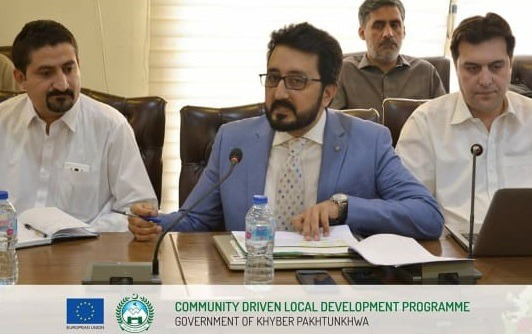
Syed Ishfaq Ur Rehman
Governance and Public Policy Specialist
Pakistan at the Crossroads: Who Blinks First in the Power Struggle?
The unfolding contest between the state and PTI is reshaping politics, institutions, and the future social contract
Pakistan is once again locked in a familiar but intensified struggle: a confrontation between an entrenched governing order and a popular political force that refuses to fade quietly. The tug-of-war between the current regime and Imran Khan’s Pakistan Tehreek-e-Insaf (PTI) is no longer just a contest for power; it has become a defining moment for the country’s political evolution, institutional credibility, and democratic trajectory. This conflict is not episodic. It is structural, emotional, and deeply consequential.
From Political Rivalry to Existential Contest
What distinguishes the present standoff from previous political crises is its zero-sum nature. For the ruling coalition, stabilizing governance, reviving the economy, and asserting the writ of the state are framed as existential imperatives. For PTI, the struggle is portrayed as a battle for political survival, electoral legitimacy, and popular sovereignty.
Imran Khan’s removal through a vote of no-confidence did not end his political relevance; instead, it transformed him into a symbol of resistance for a large segment of the electorate, particularly the urban middle class and youth. Since then, PTI’s narrative has shifted from governance to grievance, from performance to persecution. This has kept the party politically alive even as its organizational structure has been weakened through legal, administrative, and coercive measures.
The state, on the other hand, appears determined to redraw the boundaries of acceptable politics—signaling that mass mobilization, confrontational rhetoric, and challenges to institutional authority will carry heavy costs.
Short-Term Outcomes: Managed Stability, Lingering Volatility
In the immediate term, the balance of power favors the state. Control over institutions, regulatory bodies, and the coercive apparatus allows the regime to manage street agitation, constrain PTI’s leadership, and shape the electoral environment. A carefully engineered stability—characterized by controlled dissent and selective accommodation—is the most likely short-term outcome.
However, this stability will remain brittle. PTI’s support base has not evaporated; it has gone underground, migrated online, and hardened ideologically. Suppressing a political movement without fully addressing its social roots often delays rather than resolves conflict. The result is a political calm that feels imposed rather than consensual.
The Electoral Question: Victory Without Closure?
Elections, whenever they are held, may offer procedural legitimacy but not necessarily political closure. If PTI is significantly constrained—through disqualifications, fractured leadership, or a tilted playing field—the resulting government may secure office without securing trust. Conversely, if PTI manages even a partial comeback, it will re-enter parliament emboldened and confrontational, not conciliatory.
Either scenario suggests prolonged polarization. Pakistan may witness governments that are constitutionally valid yet politically contested, perpetuating cycles of protest, litigation, and instability.
Institutions Under Strain
Perhaps the most lasting impact of this tug-of-war will be on state institutions themselves. The frequent invocation of courts, the politicization of accountability, and the blurring of lines between law enforcement and political management risk eroding institutional neutrality. When institutions are seen as participants rather than referees, public confidence becomes collateral damage.
Over time, this weakens governance capacity, complicates economic reform, and discourages long-term investment—costs that extend far beyond any single political party.
The Medium-Term Horizon: Negotiation or Normalization?
History suggests that Pakistan’s political conflicts rarely end in total victory or total defeat. More often, they conclude through exhaustion, backchannel negotiations, or shifting priorities—usually economic or external pressures. A tacit understanding between the state and PTI, even if not publicly acknowledged, remains a plausible medium-term outcome.
Such a recalibration could involve reduced confrontation, selective political space for PTI, and a mutual lowering of rhetorical temperature. Whether this leads to genuine democratic normalization or merely another temporary truce will depend on how lessons from this crisis are internalized.
The Real Stakes: Beyond Imran Khan and PTI
It is tempting to frame this struggle as a personal duel between Imran Khan and the current power structure. That framing is incomplete. The deeper question is whether Pakistan can evolve toward a political order where popular mandate, institutional balance, and rule of law reinforce rather than undermine each other.
If the outcome of this tug-of-war is the normalization of exclusionary politics, managed democracy, and perpetual confrontation, the long-term loser will not be PTI or the current regime—it will be the Pakistani state itself.
If, however, this crisis forces a rethinking of political engagement, electoral fairness, and institutional restraint, it could yet become a painful but necessary step toward democratic maturity.
Pakistan stands at a crossroads. The immediate winner may be apparent, but the final verdict of history will depend on whether power is exercised to close political space—or to redefine it more responsibly.
28 Jan 2026, 3 min read